|
Latest Research Advances & Joint Workshops
Dear Reader,
Welcome to the fifth issue of the GR4FITE3 newsletter.
As we reach the midpoint of 2026, the project continues to make significant progress towards building a more sustainable and resilient European graphite value chain for lithium-ion batteries. Over the past six months, our partners have achieved important milestones in research, collaboration and innovation, bringing us closer to our goals.
In this issue, you'll discover:
- Highlights from the second GR4FITE3 Multi-faceted Impact Assessment Workshop, hosted in London by our partners Minviro and BRGM;
- A new scientific publication from KNUTD, presenting an innovative approach to producing high-purity spherical graphite that reduces material losses while maintaining the performance required for lithium-ion battery anodes;
- The latest research from CEA and The Gas Institute of the National Academy of Sciences of Ukraine, showcasing advances in laser pyrolysis, coating, thermal processing, and reactor design;
- A selection of recent news and developments from the battery materials and critical raw materials sectors, keeping you informed about the rapidly evolving landscape surrounding Europe's battery value chain.
Thank you for your continued interest in GR4FITE3. We hope you enjoy this edition, and we invite you to share it with colleagues who may be interested in our latest research, project activities and achievements.
The GR4FITE3 team
|
| |
|
Insights from GR4FITE3 research on coating, thermal processing, and reactor design |
|
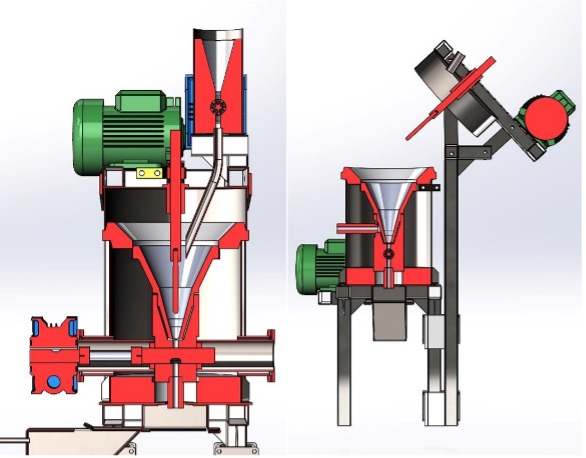
Recent research outputs from the project highlight three interconnected areas: surface engineering of graphite via pitch carbonization, industrial-scale thermal processing design, and reactor modeling for high-temperature purification. |
|
|
| |
|
The big impact of small particles: advancing Silicon–Graphite battery materials |
|
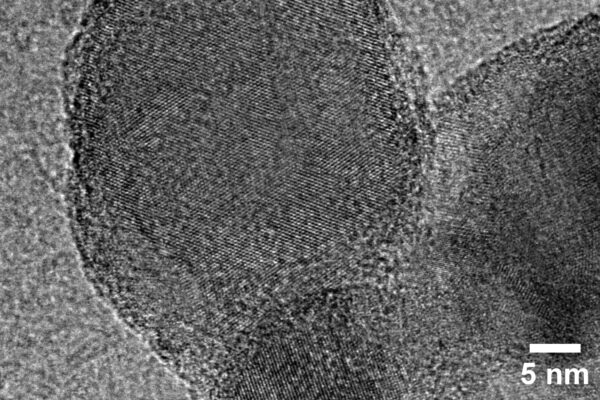
In response to a growing demand, battery manufacturers are looking beyond conventional graphite to develop anode materials with higher energy density while maintaining long-term durability. One of the most promising… |
|
|
| |
|
Towards more sustainable production of battery-grade graphite |
|
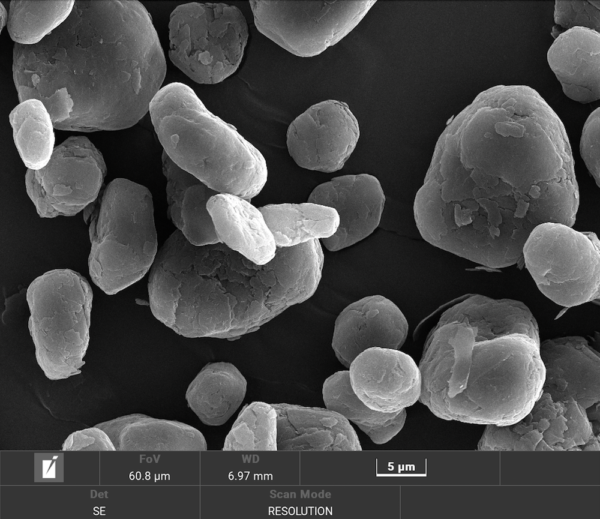
Researchers from the Kyiv National University of Technologies and Design have developed an innovative processing strategy that could make the production of battery-grade graphite more efficient, reducing material losses while… |
|
|
| |
|
Slow heat, stronger batteries: the science behind graphite coating |
|
Modern lithium-ion batteries use graphite as the material in the anode. To improve performance, graphite particles are coated with a very thin layer of carbon. This process presents several challenges. |
|
|
| |
|
Advancing Environmental and Social Assessment for sustainable graphite value chain |
|
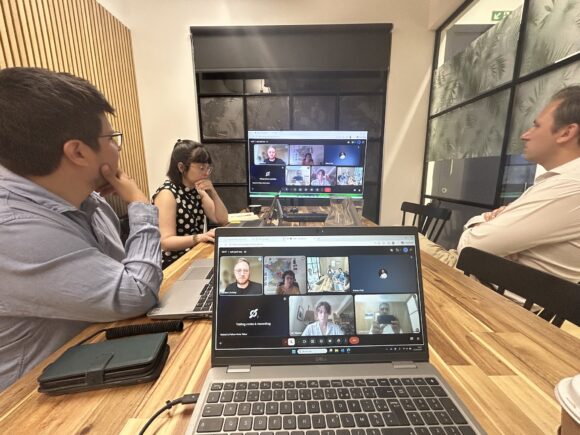
Partners from Minviro and BRGM recently came together in London for the second workshop dedicated to the Multi-faceted Impact Assessment of the GR4FITE3 project. |
|
|
| |
|
Circular batteries: Pathwasys for an integrated value chain in Europe |
|
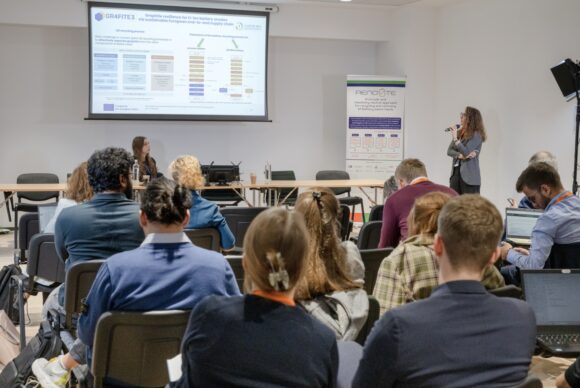
GR4FITE3 participated to the workshop organized by the Renovate project on May 5th, 2026 |
|
|
| |
|
New report highlights key challenges and opportunities for Europe’s battery sector |
 |
|
As Europe accelerates its transition towards sustainable energy and electrification, the report provides a timely overview of the main technological trends, market dynamics, and structural challenges shaping the future of batteries. It highlights how innovation in this field goes beyond scientific breakthroughs, requiring strong validation, real-world applicability, and alignment with regulatory and industrial needs to ensure successful market uptake.
The analysis also underlines key barriers to Europe’s competitiveness, including dependence on critical raw materials, skills shortages, and the complexity of scaling up production, while pointing to the importance of coordinated action across the value chain.
From the perspective of GR4FITE3, these insights are particularly relevant: the project contributes directly to strengthening Europe’s battery value chain by advancing sustainable graphite supply and anode materials, addressing both performance and environmental challenges.
Importantly, the report emphasises a shift towards a more execution-focused and market-driven approach, where success depends on the ability to translate research into scalable, competitive solutions embedded within robust European ecosystems.
The full report is available on the ICONS website.
Photo by 灿雄 邱 on Unsplash
|
| |
GR4FITE3
Funded by the European Union. Views and opinions expressed are those of the author(s) only and do not necessarily reflect those of the European Union or the European Climate, Infrastructure and Environment Executive Agency (CINEA). Neither the European Union nor the granting authority can be held responsible for them.
| |
|